
Exploring Historical Narratives of Gender and Power
已更新:1月11日
The relationship between gender and power is not a narrative of “gradual progress”, but rather a history of regulation, management and exclusion. Gender has never been a simple identity or social role, but rather a power structure continuously produced, maintained and enforced by the state, law, medicine, technology and cultural discourse.

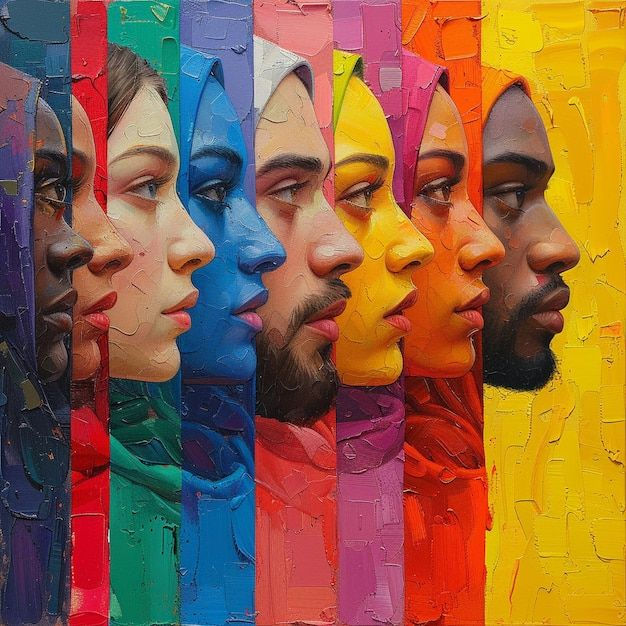
Image from: NelsonLynn
This page rejects the notion of gender as a natural or universal fact. Instead, adopting a ‘histories from below’ perspective, it analyses how gender has been institutionalised across different historical periods and explores which bodies and identities have consequently been excluded, disciplined, or exposed to violence.
Gender is not natural: how norms are constructed
Mainstream historical narratives often portray gender as a social division of labour based on biological differences, yet this framing obscures the power dynamics underpinning gender norms. Gender is not “discovered” but repeatedly defined, measured, categorised, and enforced.
From household registration systems and marriage laws to medical diagnoses and school forms, gender is embedded within administrative and technical systems, becoming data subject to management. These systems determine:
-Which bodies are deemed “normal”
-Which identities are recognised as legitimate
-Which existences are regarded as requiring correction or elimination
In this process, gender becomes an instrument of governance rather than a neutral description.
Transantagonism: When Gender Becomes a Political Battleground
In contemporary contexts, gender governance has not faded but intensified in new forms. Political panic surrounding transgender and gender diversity has crystallised into a structural hostility termed transantagonism by scholars.
This antagonism originates not solely from conservative forces but is constructed by multiple converging forces, including:
-Legal constraints on gender recognition
-Pathologising diagnoses within healthcare systems
-Forced gender categorisation by databases and algorithms
-Media overexposure of transgender bodies
Within these mechanisms, transgender and gender-expansive individuals are compelled to perpetually ‘prove’ their existence while being subjected to heightened surveillance and scrutiny.
Who is excluded from gender history?
From a grassroots perspective, it must be explicitly stated: not all individuals gain entry into the narrative of ‘gender history’.
Those systematically excluded include, but are not limited to:
-Transgender, non-binary, and gender non-conforming individuals
-Bodies unable or unwilling to undergo legal and medical validation
-Gender knowledge and practices originating from non-Western cultures
-Gender experiences not grounded in archival, textual, or institutional records
These subjects frequently emerge only in crises, controversies, or statistics, yet are seldom acknowledged as producers of knowledge and history.
Visibility, Surveillance, and Gender Governance
Within mainstream narratives, ‘being seen’ is often heralded as a sign of progress. For many gender non-conforming individuals, however, visibility frequently entails heightened risk.
Gender visibility is reinforced through media, databases, and legal procedures, rendering certain bodies objects of identification, classification, and evaluation. In such contexts, an inability to be fully read or neatly categorised may instead become a survival strategy.
Thus, refusing complete transparency and simplification is not an evasion of politics, but a direct challenge to the logic of gender governance.
Conclusion: Rewriting the History of Gender
Exploring the history of gender and power from a grassroots perspective is not about supplementing a ‘more inclusive timeline,’ but about questioning how gender itself has become the infrastructure for the operation of power.
By focusing on gender experiences overlooked by institutions, misread by technology, and excluded by history, we can re-understand that gender is not an ‘identity issue,’ but a political question concerning who is permitted to exist and who is recognised as human.

留言