
Examining cultural production from a grassroots perspective
已更新:1月11日
In contemporary society, cultural production is frequently portrayed as an ever-expanding, increasingly diverse sphere. Yet this narrative of “diversity” and “heightened participation” often obscures a more fundamental question: who holds the authority to define culture? Whose knowledge is preserved, displayed, and inscribed into history? And whose experiences and practices remain persistently overlooked, excluded, or delegitimised?

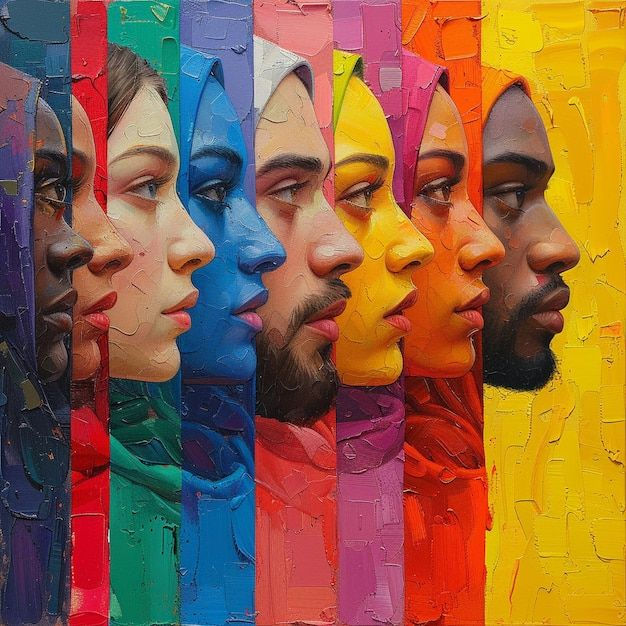
Image from: RibeiroEster
This page adopts the theoretical stance of ‘histories from below’ to re-examine how cultural production operates within power structures, focusing on subjects and practices systematically excluded by mainstream Western cultural systems.
What are ‘histories from below’?
‘Histories from below’ does not simply refer to ‘the history of ordinary people’, but rather constitutes a counter-narrative approach to historical writing.
It challenges the ‘top-down’ historical narratives dominated by the state, academia, museums, and mainstream media, emphasising the perspectives of groups suppressed, marginalised, or deliberately overlooked by power structures. Within the context of cultural production, ‘from below’ signifies a focus on the following questions:
-Who are regarded as ‘cultural producers’
-Which forms of knowledge are deemed ‘worthy of preservation’
-Which experiences are excluded from ‘official history’
This perspective rejects the notion of culture as a neutral or universal product, instead viewing it as the outcome of ongoing negotiations and struggles within power relations.
Non-Western / Non-Mainstream Cultural Production
Mainstream cultural production has long been founded upon a Western-centric value system. This framework determines what is deemed “art”, “knowledge”, or “cultural heritage” through aesthetic standards, academic conventions, and institutional thresholds.
Non-Western and non-mainstream cultural production often exhibits the following characteristics:
-Originating from colonial or postcolonial contexts
-Centred on oral traditions, practices, embodied experiences, or communal memory
-Failing to conform to the conventions of museums, academic journals, or archival systems
Consequently, these cultural forms are frequently dismissed as ‘secondary,’ ‘informal,’ or ‘unverifiable,’ thereby being excluded from mainstream cultural narratives.
Who is excluded from cultural institutions?
To examine cultural production from a grassroots perspective, we must specifically identify ‘who is excluded’ rather than merely offering abstract descriptions.
Museums
Colonised groups, transgender communities, community practices and intangible cultural heritage are often displayed solely as ‘objects’ rather than as producers of knowledge.
Academic Framework
The social context exerts a profound influence on cultural production. For instance, social movements during specific periods may inspire artists to create works reflecting contemporary realities. Take China's Cultural Revolution era as an example: numerous artistic endeavours were shaped by political propaganda, mirroring the prevailing social atmosphere.
Economic Factors
Economic conditions directly influence funding sources and market demand for cultural production. During periods of economic prosperity, the cultural sector often secures greater investment and support, whereas cultural output may be constrained during economic downturns.
Technological Factors
Technological advancements transform the methods of cultural production. The proliferation of digital technology enables broader participation in cultural creation. For instance, the rise of social media platforms empowers ordinary users to become content creators, thereby fostering cultural diversity.
Political Factors
The political environment exerts an equally significant influence on cultural production. Government policies, legal frameworks, and cultural censorship regimes all shape the creation and dissemination of cultural products. For instance, in certain nations, artistic works may face stringent scrutiny, curtailing creators' freedom of expression.
Media
Mainstream media frequently reproduces stereotypical representations, reducing marginalised groups to symbols, talking points, or subjects of controversy rather than complex historical subjects.
Historical Narratives
Much historical writing relies upon archives, documents, and institutional records, which inherently exclude those unable to access state and administrative systems.
Such exclusions are not accidental, but rather the result of the interplay between cultural production and power structures.
Challenges and Opportunities in Cultural Production
Within a rapidly evolving cultural landscape, cultural production confronts numerous challenges while simultaneously presenting substantial opportunities.
Challenges
-Information overload: In the digital age, consumers are inundated with vast quantities of information, making it a significant challenge for cultural products to stand out amidst this deluge.
-Economic Pressure: Many artists and creators endure financial strain, necessitating solutions to achieve economic independence while maintaining creative quality.
-Cultural Homogenisation: Globalisation facilitates cultural exchange yet risks cultural homogenisation, making the preservation of cultural distinctiveness a critical concern.
Opportunities
-Technological Innovation: The emergence of new technologies provides fresh tools and platforms for cultural production, enabling creators to realise richer forms of expression.
-Globalisation: Increasingly frequent exchanges between diverse cultures allow creators to draw inspiration, producing works with a broader international perspective.
-Diversity: As society increasingly values diversity, a wider range of cultural voices are recognised and embraced, enabling creators to showcase their work on a broader stage.
Cultural Production, Power and Visibility
Exclusion does not invariably equate to “invisibility”. In numerous instances, marginalised groups are highly visible, yet this visibility serves surveillance, categorisation and governance.
Consequently, cultural production from subaltern perspectives pursues not merely “being seen”, but also critiques visibility itself. Refusing complete identification, simplification or assimilation into mainstream frameworks becomes a vital cultural and political strategy.
Conclusion
Examining cultural production from a grassroots perspective enables a more comprehensive understanding of how culture forms and evolves. Cultural production is not merely the work of artists; it constitutes a complex social process involving the efforts and contributions of every participant. In this rapidly changing era, grasping the underlying logic of cultural production will better equip us to engage in both cultural creation and consumption. This is not simply to ‘add more stories,’ but to question how cultural authority is constructed.
It compels us to reconsider:
-Whose culture is it?
-Whom does history serve?
-And whether we can envision a cultural future that does not presuppose exclusion.
Moving forward, cultural production will continue to evolve, with emerging technologies and societal trends continually shaping our cultural landscape. As both consumers and creators, we must actively engage in this process, championing cultural diversity and innovation.

留言