
Visibility and History: Analysing Cultural Representation
已更新:1月11日
Cultural representations are never neutral presentations of history. Who is seen, how they are seen, and under what conditions they are seen, invariably result from the exercise of power. This page adopts a ‘histories from below’ perspective to explore how visibility shapes cultural history, and how cultural representations simultaneously reproduce, produce, regulate, and exclude specific subjects.
In contemporary society, visibility is often understood as a symbol of progress and inclusivity. Yet for many marginalised groups, being seen frequently entails surveillance, simplification, or even exposure to new forms of violence.
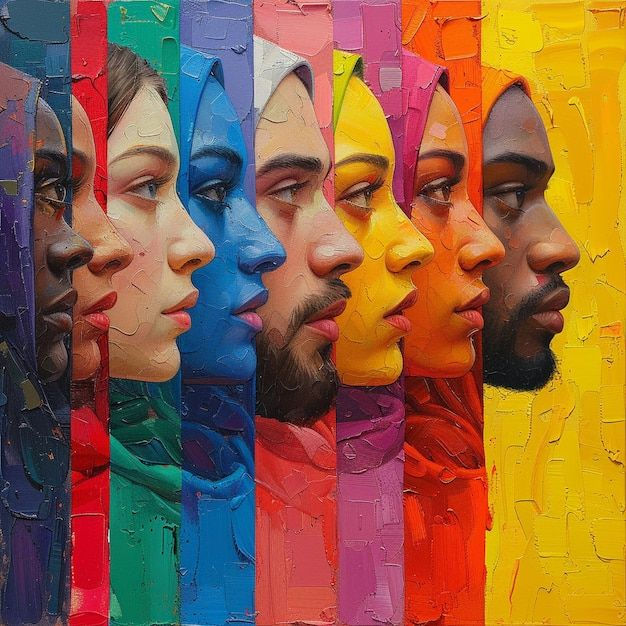
Image from: Freepik
Visibility is not neutral: cultural representation as a mechanism of power
Mainstream cultural institutions—museums, media platforms, archival systems and digital databases—do not merely “display culture”; they simultaneously determine:
·Which stories merit preservation
·Which bodies merit viewing
·Which histories may be narrated
Cultural representation thus functions as a filtering mechanism, compressing complex, multifaceted experiences into consumable, recognisable images. In this process, certain cultures are perpetually reproduced, while others are marginalised or erased entirely.
To be seen, or to be managed?
In contemporary society, where digital and visual culture are highly developed, visibility increasingly relies on technological systems. Algorithms, search engines, and social media platforms determine which cultural content is amplified and which is concealed.
This technologised visibility is not equitably distributed:
- Certain bodies endure perpetual exposure, scrutiny, and debate
- Certain identities appear only through stereotypical representations
- Certain experiences gain visibility solely through “crisis” or “controversy”
Visibility thus transcends mere representation, becoming a form of governance.
History, Empire, and Visual Regimes
From colonial archives to contemporary museum displays, visual regimes have long served imperial and power structures. Colonial-era image production transformed non-Western cultures into ‘objects’ for viewing, study, and collection, rather than subjects capable of self-narration.
This visual logic persists within contemporary cultural production:
- Non-Western cultures are frequently treated as ‘diversity props’
- The histories of marginalised groups are depoliticised and decontextualised
- Complex social experiences are compressed into symbols and styles
Here, history is not represented but reorganised to conform to mainstream modes of viewing.
Opacity as Resistance: Refusing to Be Fully Seen
Within the theoretical framework of Unit 07, not all political actions aim for ‘greater visibility’. For certain groups, opacity, illegibility, and refusal to be represented constitute vital strategies for survival and resistance.
Refusing clear categorisation and simplification into labels directly challenges the politics of visibility. Such practices subvert the logic that ‘to be seen is to be acknowledged,’ emphasising the subject's control over their own representation.
Rethinking the role of cultural representation
Examining cultural representation from a grassroots perspective means moving beyond merely asking what a work ‘shows,’ and instead inquiring:
- Who is being shown?
- Who determines how they are shown?
- Who bears the risk of being seen?
Cultural representation can serve as a space for resistance, or it can reinforce existing power structures. The crux lies not in visibility itself, but in who controls it and whom it serves.
Conclusion
The relationship between visibility and history is neither linear nor unidirectional. Cultural representation does not merely make history “appear”; it continually shapes how we understand history, identity, and values.
By questioning visibility itself, we are able to rethink the ethics and politics of cultural production, reserving space for those histories and subjects that refuse to be fully seen or fully interpreted.间


留言